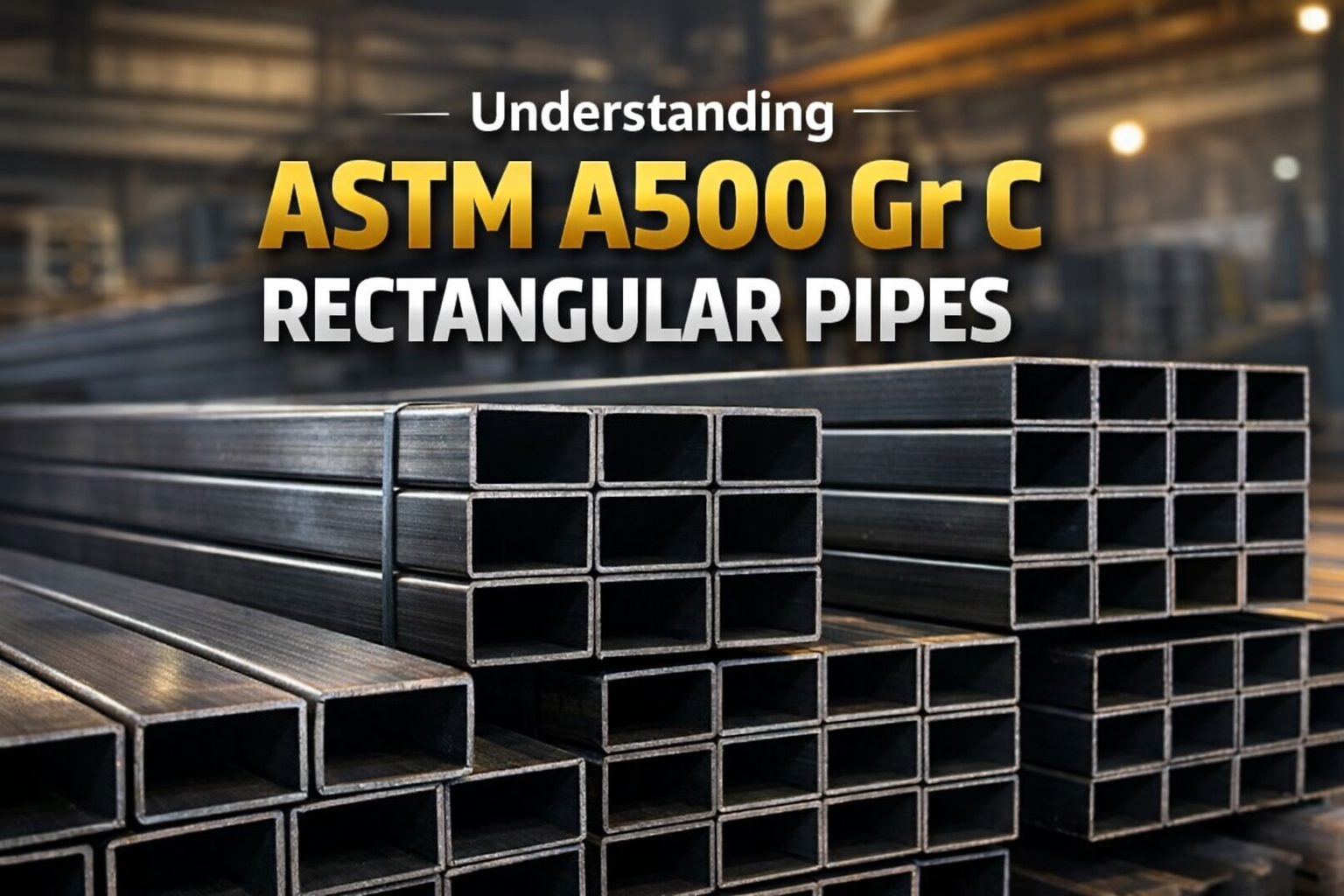
Steel pipes turn up almost everywhere once you start noticing them. Walk through any warehouse build or fabrication yard and you will see rectangular hollow sections stacked in bundles, waiting to become columns, frames, or machine bases. They carry weight quietly. Among these sections, ASTM A500 Gr C Rectangular Pipe is specified again and again for structural work where strength has to be dependable and measurable, not guessed.
What is ASTM A500 Gr C Rectangular Pipe?
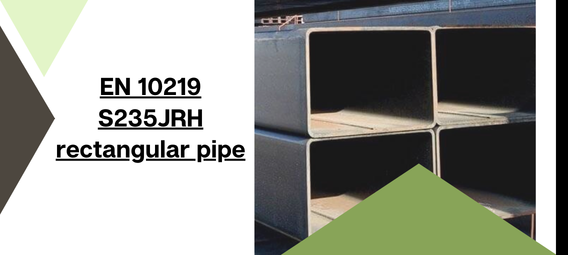
ASTM A500 Grade C rectangular pipe is a cold-formed carbon steel structural tube produced to meet the technical limits set by ASTM A500. The section is shaped from flat steel strip, formed into a rectangular profile, and welded along its length under controlled conditions so that wall thickness and dimensions stay within strict tolerance. It is made for load-bearing work.
Because the forming takes place at room temperature, the steel gains added strength from the shaping process itself, and that small but important shift in structure allows engineers to use the section confidently in frames and supports without stepping up to more expensive alloy grades that complicate welding and procurement.
Properties of ASTM A500 Gr C Rectangular Pipes
Strength figures often drive the purchase decision. Grade C offers a minimum yield strength of 427 MPa and a tensile strength around 585 MPa, which provides a solid working range for structural designers calculating beam spans or column loads under live and dead weight combined. Those numbers hold weight on site.
Elongation sits near 23 percent, giving the material enough flexibility to absorb stress before failure, and hardness values close to 89 HRB support general durability in industrial settings where vibration, shifting loads, and daily operational strain are simply part of the environment and cannot be designed away.
The chemical balance supports this behaviour. Carbon content stays around 0.23 percent, keeping strength high while maintaining workable weldability; manganese adds toughness and supports ductility under stress variation, while tightly controlled phosphorus and sulphur levels help machinability so cutting and drilling remain practical in fabrication shops where time and precision both matter. Small traces of silicon and copper sit in the mix, steadying overall performance without creating processing difficulty.
Uses of ASTM A500 Gr C Rectangular Pipes
In building construction, this rectangular tubing appears as in structural frames, load-bearing columns, mezzanine platforms, and roof support systems. The flat surfaces simplify alignment during erection. That helps crews move faster.
Fabrication and mechanical sectors use the same grade for conveyor frames, crane components, equipment supports, and heavy machine bases, where resistance to bending and torsion becomes critical once real operating loads begin to act across the section in uneven patterns that standard light tubing simply cannot handle.
Transport and trailer manufacturers also select ASTM A500 Gr C rectangular pipes for chassis members and support frames, because the strength-to-weight ratio allows durable construction without excessive mass, and consistent weld performance near joints and brackets contributes directly to long-term reliability on the road.
Conclusion
ASTM A500 Gr C rectangular pipe remains a practical choice for structural engineers, contractors, and procurement teams who need predictable strength and workable fabrication characteristics in one material. It performs under pressure.
When selecting rectangular structural tubing for commercial or industrial projects, reviewing its mechanical values, chemical composition, and intended service conditions ensures that the chosen section will meet load demands, integrate smoothly into fabrication processes, and deliver steady performance long after installation is complete.