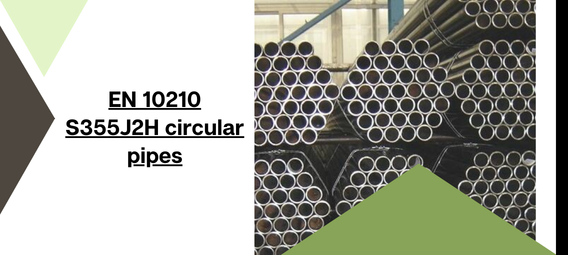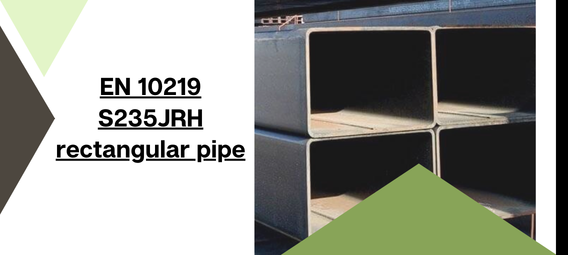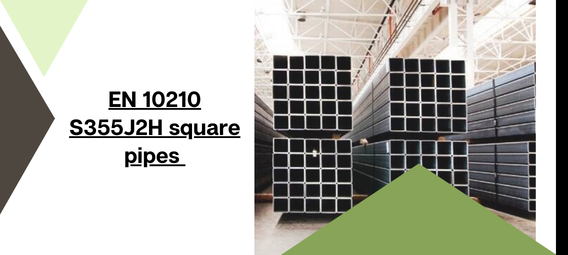
EN 10210 Structural Hollow Sections
EN 10210 S355J2H square pipes play a crucial role in modern steel constructions. These portions are designed to be strong, stable, and long-lasting. They are often used in applications where load control and safety are critical. This standard provides specific requirements for quality, testing, and performance. As a result, these pipes are appropriate for high-demand applications. Engineers value the balance of strength, and ease of manufacture. The application of hot-finished square pipe enhances grain structure and stress control. This blog discusses the EN 10210 standard, the S355J2H grade, and the core EN 10210 square tube parameters. It also focuses at manufacturing, quality control and actual project use. Applications in construction, infrastructure, and heavy engineering are clearly defined.
Understanding the EN 10210 Standard and S355J2H Grade
The EN 10210 standard defines requirements for hot-finished hollow sections used in structures. It covers chemical limits, strength values and impact testing. S355J2H is a common grade under this standard. It is supplied in a normalised or hot-finished state. The grade offers a minimum yield strength of 355 MPa. Charpy impact tests ensure toughness at low temperatures. Carbon content remains controlled to support welding. These rules ensure stable performance in real structures. Engineers select S355J2H for reliable strength, safety margin, and predictable behaviour under load.
Key Mechanical and Physical Properties of S355J2H Square Pipes
S355J2H square pipes provide balanced mechanical performance. The yield strength meets load-bearing requirements, whereas tensile strength enables regulated deformation before failure. Elongation values help to absorb tension without breaking. Impact hardness is consistent at subzero temperatures. This matters in outdoor and elevated sites. Dimensional control ensures uniform wall thickness. This supports even stress flow across the section. These EN 10210 square tube specifications help in maintaining stability under static and dynamic stresses. This makes a part that works well in various conditions.
Manufacturing Process and Quality Control
S355J2H square pipes are produced using a hot-finished process. Steel is formed at high temperatures and shaped into hollow sections. This reduces internal stress and improves grain flow. Normalising further refines mechanical balance. Each batch follows strict testing rules. Dimensional checks, strength tests, and impact tests are standard. Surface finish is monitored to avoid defects. Tolerance control ensures fit during fabrication. These processes ensure EN compliance and long-term performance.
Applications in Construction Projects
Steel is used extensively in commercial and residential construction. Its strength and uniformity make it ideal for modern construction, where safety and longevity are essential. Steel constructions are used by engineers to create stable frames that may be used for decades with minimal maintenance.
- Use in Commercial, and Residential Building Frameworks
Steel is commonly used in shopping malls, commercial buildings, apartments, and private homes. It provides a strong base for floors, walls, and roofs. Steel frames are faster to construct than traditional materials, resulting in shorter overall project timelines.
- Structural Columns, Beams, and Trusses
Steel columns, beams, and trusses withstand heavy loads without becoming too heavy. These components maintain shape under stress, and provide reliable support over long distances. Their uniform quality ensures consistent performance during construction and long-term use.
- Benefits for Seismic-Resistant and High-Rise Buildings
Steel constructions perform well during earthquakes, as they are flexible. This reduces the chance of a sudden failure. Steel is the preferred choice for earthquake-prone regions as it supports taller designs while maintaining residental safety in high-rise buildings.
- Load Distribution and Design Flexibility Advantages
Steel is resistant to wear, impact, and environmental stress when properly maintained. Protective coatings, and finishes increase corrosion resistance, resulting in consistent performance over time
Role in Infrastructure Development
Steel is a critical component in infrastructure projects that require outstanding strength, reliability, and long service life. It can withstand heavy traffic loads and extreme environmental conditions.
- Bridges, Flyovers, and Transport Infrastructure
Steel is often used in bridges, flyovers, railroad constructions, and metro projects. Its strong load-bearing capability ensures stability under constant movement and vibration. Steel also allows for larger spans, which reduces the need for additional supports.
- Utility Poles and Support Structures
Steel provides strength and stability to power transmission towers, lighting poles, and communication structures. Steel is an ideal material for these constructions as it can withstand wind, weather and prolonged exposure.
- Long Service Life and Resistance to Environmental Stress
Steel is resistant to wear, impact, and environmental stress when properly maintained. Protective coatings and finishes increase corrosion resistance, resulting in consistent performance over time
- Suitability for Large-Scale Public Projects
Public infrastructure projects require materials that offer safety, durability and cost efficiency. Steel provides these requirements which offers standardisation, and quality control that make it appropriate for large-scale developments.
- Importance in Heavy Engineering and Industrial Structures
Heavy engineering relies on stable steel sections. S355J2H square pipes meet demanding load needs. They are used in cranes, industrial sheds and machine frames. High strength supports heavy equipment weight. Performance remains stable under repeated load and vibration. Welding remains clean and predictable. Fabrication suits complex layouts and tight tolerances.
Advantages of Choosing EN 10210 S355J2H Square Pipes
These square pipes offer practical benefits across project stages.
- High strength-to-weight ratio
Strong yield values reduce section size needs. This lowers overall steel weight. Handling and transport become easier.
- Excellent weldability and machinability
Controlled carbon content supports clean welds. Fabrication time stays predictable. Joint quality remains consistent.
- Cost-effective lifecycle performance
Durable steel reduces repair needs. Long service life lowers replacement cost. Maintenance demands stay limited.
- Compliance with international standards
EN 10210 certification supports global applications. Testing rules ensure quality control. This simplifies the approval and inspection processes.
Why EN 10210 S355J2H Square Pipes Are a Smart Structural Choice
JF Engineering Products LLP recommends EN 10210 S355J2H square pipes for demanding structural work. These sections deliver reliable strength, stable performance, and consistent quality. They support building frames, infrastructure systems, and heavy engineering units. Hot-finished production improves toughness and stress control. Proven EN 10210 square tube properties support safe load handling. Wide acceptance and clear standards makes design and approval easier. EN 10210 S355J2H square pipe is a reliable structural solution for applications that require strength, safety, and a long service life. Contact us today.