EN 10210 S355J2H Circular Pipes
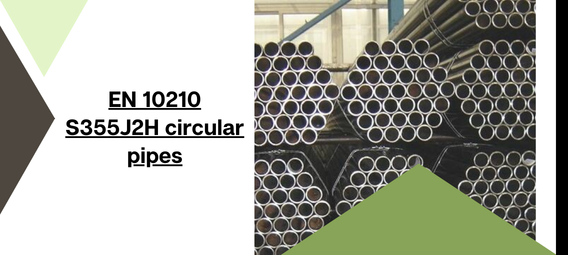
The construction and engineering industries rely significantly on structural components that can withstand extreme stresses while being easy to assemble. EN 10210 S355J2H circular pipes have become an industry standard in various industries due to its unique combination of strength and use. These hot-finished hollow sections are engineered to meet stringent European requirements, ensuring consistent performance under severe loads and extreme weather conditions. These pipes are often used as skeletons for buildings, bridges and industrial machines, their ability to be welded without losing integrity is critical. This article examines the technical aspects of these pipes, focusing on how their chemical composition enhances outstanding weldability and how their interior structure provides strong impact resistance. It also examines the S355J2H material qualities that make this grade an effective option for modern infrastructure, as well as why it continues to be a reliable alternative for engineers around the world.
Understanding the EN 10210 Standard and S355J2H Grade
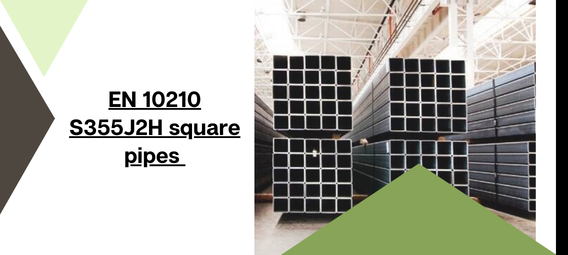
EN 10210 is a European standard for hot-finished structural hollow sections used in load-bearing structures. It covers circular, square, and rectangular sections with strict quality controls. The standard ensures consistent strength, shape, and surface quality. The grade name S355J2H has a clear meaning. “S” refers to structural steel, while 355 shows the minimum yield strength in megapascals. “J2” confirms impact testing at low temperature, and “H” indicates hollow sections. These pipes are made using a hot-forming process, followed by controlled cooling. This process improves internal structure and reduces residual stress. Tight dimensional control supports easy fit-up during fabrication. As a result, EN 10210 S355J2H pipes offer reliable performance in structural systems.
Chemical Composition and Its Influence on Weldability
The chemical composition of S355J2H steel influences its weld behaviour. The steel contains controlled levels of carbon, manganese and trace alloying metals. Low carbon content reduces hardness in the weld region. This reduces the possibility of cold cracking after welding. Manganese improves strength while maintaining stable weld pools. Small additions of elements, such as niobium or vanadium help to refine grain size. This increases strength and toughness without reducing weldability. Controlled chemical composition also maintains the carbon equivalent within safe limits. That allows welding with common methods and standard consumables. These S355J2H material properties make the steel suitable for site welding and shop fabrication. Proper control of composition supports clean welds and consistent joint strength.
Weldability Characteristics of EN 10210 S355J2H Circular Pipe
EN 10210 S355J2H circular pipes show good compatibility with common welding processes. MIG, TIG, SMAW, and SAW methods are widely used on this grade. For most wall thicknesses, preheating is not required. Preheat may be needed for thick sections or cold site conditions. The heat-affected zone remains stable when proper heat input is used. Excess heat should be avoided to limit grain growth. Balanced welding parameters help preserve strength near the joint. Low hydrogen consumables are often recommended for safety. Clean joint edges, and controlled cooling improve weld quality. When best practices are followed, the S355J2H mechanical properties remain intact after welding.
Toughness Properties and Impact Resistance
Toughness is a material’s ability to absorb energy prior to breaking. Toughness in structural work prevents sudden brittle failures. EN 10210 S355J2H pipes meet stringent impact testing standards. The J2 designation verifies Charpy’s V-notch testing at -20°C. This ensures consistent performance in cold environments. High impact values reduce crack spread under dynamic loads. These pipes perform well in vibrating structures and shock-prone areas. Cold-weather construction also benefits from this toughness level. The refined grain structure from hot finishing supports stable impact strength. As a result, S355J2H pipes maintain safety margins in demanding service conditions.
Effect of Welding on Toughness and Mechanical Performance
Welding introduces heat that can change local steel properties. High heat input may reduce impact strength near the weld. Controlled welding parameters help protect toughness levels. Using correct travel speed and amperage limits thermal damage. Interpass temperature control also plays an important role. Slow cooling can soften the joint area if not managed. Post-weld treatments often required standard components. Visual inspection and non-destructive tests help in confirming joint quality. These processes ensure that strength and toughness remain within limitations. With proper control, welded joints match base metal performance in service.
Applications Requiring High Weldability and Toughness
Applications that require excellent weldability and toughness are often operating under continual load, vibration and changing weather. Stable welded joints allow structural steel frames and bridges to sustain enormous loads over long spans without cracking. Offshore platforms and industrial pipelines are subjected to low temperatures, pressure, and cyclic stress, and poor toughness can result in unexpected failure. Heavy engineering and infrastructure projects, such as transportation structures and plant supports, require materials that are reliable during fabrication, and extended service life. EN 10210 S355J2H circular pipes meet these requirements due to its regulated chemical composition and verified impact strength. The hot-finished structure supports uniform welding and consistent performance across sections. These pipes are preferred in critical load conditions because they reduce weld defects, handle dynamic forces, and maintain strength in cold or demanding environments.
Advantages of Using EN 10210 S355J2H Circular Pipes
This grade offers clear benefits for fabricators and project owners. Performance remains stable across varied conditions.
- Consistent mechanical properties: Hot-finished production provides uniform strength and toughness across the full pipe length and section. This consistency supports accurate structural design and reliable load calculations. Predictable behaviour under stress reduces safety margins and material waste.
- Ease of fabrication and welding: Low carbon content and controlled chemistry allow smooth welding using standard processes and equipment. Welds form cleanly with minimal defects. Reduced cracking risk shortens fabrication time and lowers repair and inspection costs.
- Enhanced safety and long service life: High impact resistance helps prevent sudden fracture under shock or dynamic loads. The material performs well in cold and demanding conditions. Structures retain stability and strength over extended service periods.
- Compliance with international structural standards: The material meets EN 10210 requirements and is accepted in many global projects. Designers often reference the S355J2H material equivalent for cross-border specifications. This simplifies approval and material selection for international work.
Conclusion: Why EN 10210 S355J2H Circular Pipes Are a Reliable Structural Choice
At JF Engineering Products LLP, EN 10210 S355J2H circular pipes offer strong weldability and dependable toughness for structural work. Controlled chemistry supports clean welding and stable joints. J2 impact testing ensures safe use in cold and dynamic conditions. Proper fabrication practices protect these properties during construction. Careful heat control and inspection maintain long-term performance. These pipes suit demanding engineering, infrastructure, and industrial projects. Their balanced strength and safety margins reduce risk across service life. For critical load-bearing structures, EN 10210 S355J2H remains a proven and trusted choice. Contact us today at JF Engineering Products LLP to discuss project needs and material selection.