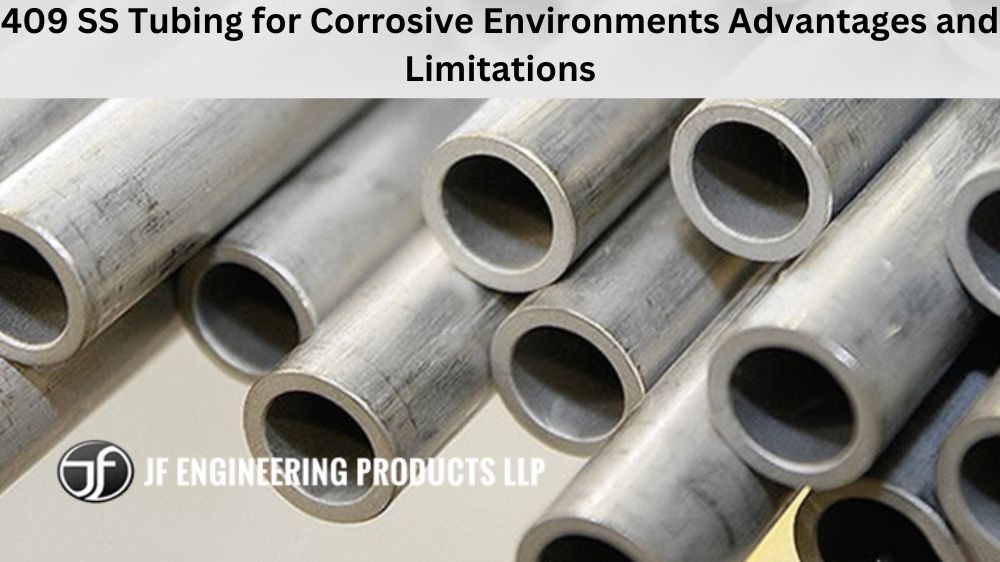
Are you looking for a material that can protect your equipment from the wear and tear of corrosive environments? If so, then 409 SS Tubing may be just what you need. It has many advantages over other materials, including its extreme durability and long-term protection against corrosive elements. This tubing is suitable for use in various settings where temperatures or pressures could change rapidly – making it an ideal choice when extra reliability is needed. But it has its strengths and limitations, which this blog post will explore to give you an informed understanding of whether 409 SS Tubing is right for your application.
What is 409 SS Tubing?
409 SS Tubing is a type of stainless steel that contains 11% chromium, which gives it very high corrosion resistance. It’s also extremely strong and durable due to its composition of iron, molybdenum, and other elements. This makes it ideal for use in corrosive environments such as automotive exhaust systems or chemical processing plants. Its excellent heat-resistance properties suit high-temperature applications like steam pipes or engine manifolds. Furthermore, this product has an aesthetically pleasing polished appearance and is highly resistant to scuff marks.
Corrosion Resistance
One of the main advantages of 409 SS tubing is its excellent corrosion resistance. This type of tubing contains 10% or more chromium, which forms a passive protective layer that prevents rust and corrosion from penetrating the surface. The material can withstand harsh environmental conditions such as saltwater, high humidity, and acidic environments.
Cost-effective Solution
409 SS tubing is a cost-effective solution for applications that require corrosion resistance. Compared to other stainless steel grades, such as 304 or 316, 409 Stainless Steel tubing is less expensive. This makes it a practical choice for industries requiring high-performing materials without breaking the bank.
Heat Resistance
Another advantage of 409 SS tubing is its ability to withstand high temperatures. This type of tubing can withstand temperatures up to 815°C (1500°F). It is commonly used in exhaust systems, where high temperatures are common. Unlike other materials that may oxidize at high temperatures, 409 SS tubings can maintain their properties even under extreme heat.
Limitations
While 409 Stainless Steel tubing is an excellent choice for many applications, it does have limitations. One of the main limitations is its low resistance to salt spray or chloride exposure. The tubing may require frequent maintenance or replacement if exposed to harsh environments such as those found in marine or coastal regions. Also, 409 SS tubing may not be as suitable for applications requiring high-strength or structural properties.
Another limitation of 409 SS tubing is its work-hardening ability. This means that the material may become tougher and more difficult to work with as it is exposed to mechanical stress, such as bending or welding. However, with proper handling and fabrication techniques, 409 Stainless Steel tubing can be formed into different shapes and sizes as required.
Conclusion:
In conclusion, 409 SS tubing is an excellent choice for applications that require corrosion resistance and high-temperature tolerance. Its cost-effective price and heat-resistant properties make it a viable option for many industries. However, its limitation in salt spray and low-strength properties make it unsuitable for certain applications. It is essential to evaluate the requirements of your project and consult with a professional to determine if this product is the ideal material for your needs. With proper handling and maintenance, these products can provide reliable and durable performance for years.



